
The common player often finds roleplaying intimidating or feels their character concepts are generic, leading to Roleplay Inhibition. This is a Generic Archetype Fallacy. True roleplay immersion is not about complex backstories; it is the strategic development of a cohesive character concept rooted in motivations, flaws, and personality quirks that make them feel alive. Every character decision, from race to class to name, contributes to their authentic identity. “Roleplay Starter Guide” is the discipline of crafting a believable persona, transforming you from a passive player into a Vibrant Storyteller of Azeroth. To win, you must stop being a simple adventurer and start embodying a unique, living presence within the world.
The Burden of the Blank Slate
Most players suffer from Character Conception Paralysis, feeling overwhelmed by the freedom of creation or worrying their ideas aren’t “good enough.” This results in Unengaging Personas that lack depth. A master roleplayer, however, practices Core Trait Development. They focus on a few key elements: their character’s primary motivation (why are they an adventurer?), a defining personality trait (are they stoic, jovial, cynical?), and one significant flaw (are they overconfident, naive, quick to anger?).

By establishing these foundational traits, they create a solid framework upon which more intricate details can naturally evolve. The goal is to make the character feel internally consistent and relatable, ensuring that every interaction and decision in the game feels authentic to their persona, transforming gameplay into an immersive, ongoing narrative.
The Authentic Character Concept Checklist
- 1. Core Motivation: Why are they here?
- Principle: Every character needs a reason to adventure.
- Questions: Are they seeking glory, redemption, revenge, knowledge, wealth, or simply survival? This drives their actions.
- Impact: Provides an internal compass for decisions.
- 2. Defining Personality Trait: What makes them unique?
- Principle: A strong, consistent personality is memorable.
- Questions: Are they optimistic, pessimistic, pragmatic, impulsive, honorable, ruthless?
- Impact: Shapes their dialogue, reactions, and interactions.
- 3. Significant Flaw: What holds them back?
- Principle: Flaws add depth and realism, creating internal conflict.
- Questions: Are they arrogant, fearful, naive, overly trusting, vengeful, materialistic?
- Impact: Creates opportunities for character growth and relatable struggles.
- 4. Connection to Race/Class: How does it inform them?
- Principle: Leverage existing lore for rich character background.
- Questions: How does being a [Race] influence their worldview? What traditions of their [Class] do they uphold or reject?
- Impact: Grounds the character in Azeroth’s history.
- 5. Appearance & Demeanor: What do they project?
- Principle: Visuals reinforce personality.
- Questions: Does their transmog reflect their personality (gritty, flamboyant, scholarly)? How do they carry themselves (proud, slumped, energetic)?
- Impact: Immediate visual communication of their persona.
- 6. Name Choice: What does it imply?
- Principle: A good name hints at identity.
- Questions: Is it a traditional racial name, a unique creation, or a title? Does it have a hidden meaning?
- Impact: Sets an initial tone and expectation.
The “Implicit Roleplay” Technique
Elite roleplayers utilize an “Implicit Roleplay” Technique. They don’t always need to be in a dedicated RP event to embody their character. Even during a casual dungeon or a simple quest, their character’s personality subtly influences their actions and dialogue (e.g., a gruff warrior responding curtly, a scholarly mage observing arcane details, a jovial rogue making lighthearted comments).
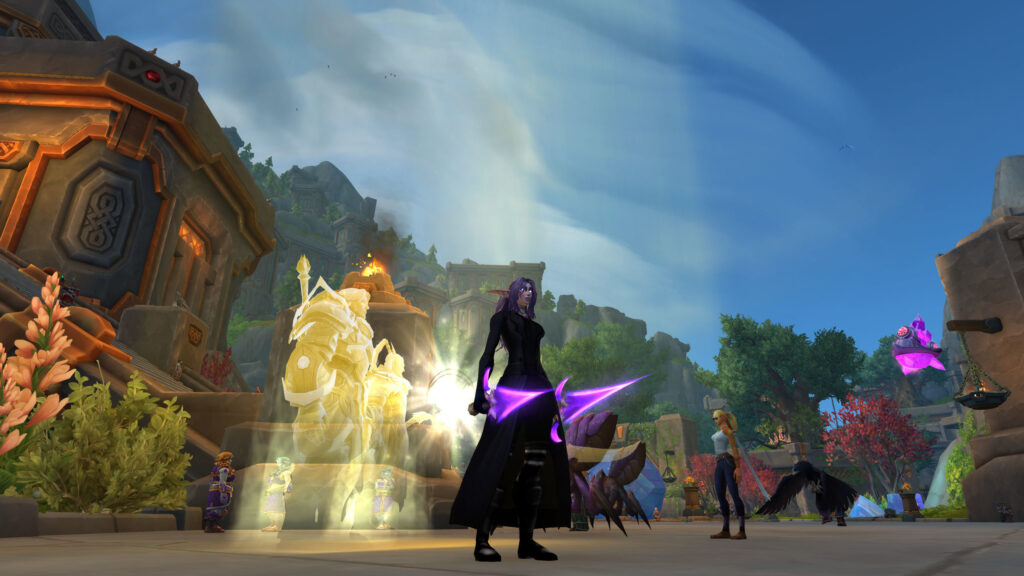
This continuous, low-key embodiment prevents Contextual RP Isolation and ensures that their character feels consistently “on,” making every interaction an opportunity to express their persona. This subtle, pervasive roleplay enhances their own immersion and makes their presence more memorable to others, even without explicit RP interaction.
Leveraging “NPC Interactions” for Character Development
A master character builder actively leverages “NPC Interactions” for Character Development. They don’t just complete quests for rewards; they interpret their character’s reaction to the NPCs and their plights. Does their character sympathize with the innocent? Does their motivation clash with a quest giver’s demands? How do they respond to betrayal or injustice?

This conscious engagement with the world’s inhabitants provides invaluable opportunities for their character’s personality and motivations to shine, and even evolve. This method prevents Static Character Syndrome, ensuring that their persona is constantly being refined and shaped by the unfolding narrative, making the process of questing intrinsically tied to their character’s ongoing story, and ensuring the character feels genuinely responsive to the world around them.
Conclusion: The Master of the Living Persona
Your journey in Azeroth can be more than just playing a game; it can be the embodiment of a unique story. By mastering the art of creating a believable character concept, you transform a set of pixels into a living persona. You realize that true immersion comes from developing motivations, flaws, and personality that resonate with authenticity. Stop being a generic adventurer; start embodying a distinct individual. Cultivate core traits, connect with existing lore, and allow your character’s actions to organically define their saga. You are the architect of your own personal narrative, and the master of the living persona, ensuring your presence in Azeroth is always unique, memorable, and profoundly real.